
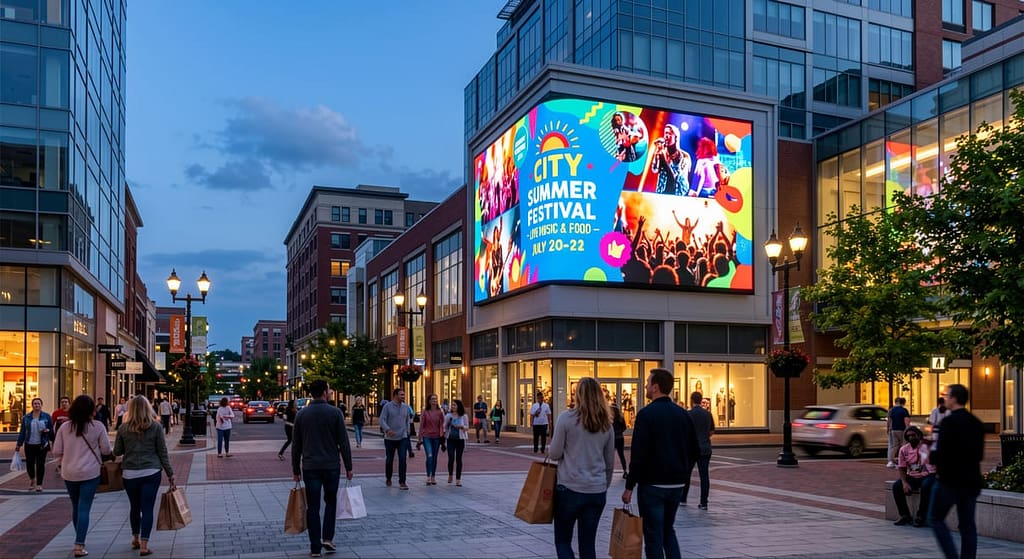
The outdoor LED display screen has become one of the most powerful tools in modern digital advertising. In 2026, businesses are rapidly moving away from traditional static billboards and adopting dynamic LED display systems that deliver real-time, high-impact visual content.
From highways and shopping centers to stadiums and commercial buildings, outdoor LED screens are reshaping how brands communicate with large audiences.
This guide explains everything you need to know about outdoor LED display screen, including their benefits, features, applications, and how to choose the right solution for your business.
What Is an Outdoor LED Display Screen?
An outdoor LED display screen is a large digital signage system designed for external environments. It uses light-emitting diodes (LEDs) to produce bright and clear visuals that remain visible even in direct sunlight.
Unlike traditional billboards, these screens can display:
- Videos
- Animations
- Advertisements
- Live content
- Real-time updates
This makes them far more flexible and engaging than static signage.
Why Outdoor LED Display Screens Are Replacing Traditional Billboards
Traditional printed billboards are limited in flexibility and require physical replacement. Outdoor LED screens offer a modern alternative with advanced capabilities.
Key reasons for their popularity include:
- Dynamic content display
- Remote content management
- High visibility day and night
- Lower long-term advertising costs
- Better audience engagement
These advantages make LED displays the preferred choice for modern advertisers.
1. High Brightness and Visibility
Outdoor LED display screens are designed for extreme visibility.
They perform well in:
- Direct sunlight
- Nighttime environments
- Rainy or cloudy weather
High brightness ensures advertisements remain clear and attention-grabbing at all times.
2. Dynamic Advertising Capabilities
Unlike static billboards, outdoor LED screens support dynamic content.
Businesses can display:
- Promotional videos
- Brand storytelling content
- Event announcements
- Rotating advertisements
This creates a more engaging advertising experience for viewers.
3. Strong Brand Exposure
Outdoor LED screens provide massive visibility in high-traffic areas.
They help businesses:
- Reach large audiences
- Increase brand recognition
- Strengthen marketing campaigns
- Improve brand recall
This makes them highly effective for long-term branding.
4. Real-Time Content Updates
One of the biggest advantages of LED display technology is instant content control.
Businesses can:
- Update ads remotely
- Change promotions instantly
- Run time-based campaigns
- Adjust messaging in real time
This flexibility improves marketing efficiency and responsiveness.
5. Cost-Effective Long-Term Solution
While installation costs may be higher initially, outdoor LED screens offer long-term savings.
They reduce:
- Printing costs
- Physical installation expenses
- Repeated advertising material costs
Over time, they deliver strong return on investment.
6. Durable and Weather-Resistant Design
Outdoor LED display screens are built for harsh environments.
They are resistant to:
- Heat
- Rain
- Dust
- Wind
This ensures reliable performance throughout the year.
7. Applications of Outdoor LED Display Screens
Outdoor LED screens are used across multiple industries.
Advertising and Marketing
Digital billboards for brand promotion.
Retail Businesses
Storefront advertising and promotional campaigns.
Transportation Hubs
Information displays at airports, bus stations, and highways.
Events and Entertainment
Concerts, festivals, and live public events.
Sports Venues
Scoreboards and live audience displays.
8. Key Features to Consider
When selecting an outdoor LED display screen, consider:
Brightness Level
Must be high enough for sunlight visibility.
Pixel Pitch
Determines image clarity and viewing distance.
Weather Protection
IP-rated protection ensures durability outdoors.
Screen Size
Should match location and audience distance.
Energy Efficiency
Modern systems consume less power while maintaining brightness.
9. Installation Considerations
Proper installation is critical for safety and performance.
Key steps include:
- Site inspection
- Structural engineering support
- Electrical setup
- Calibration and testing
Professional installation ensures long-term reliability.
10. Maintenance and Support
Outdoor LED screens require regular maintenance to ensure optimal performance.
Maintenance includes:
- Cleaning LED modules
- Checking electrical systems
- Software updates
- Performance diagnostics
Reliable after-sales support ensures uninterrupted operation.
11. Future Trends in Outdoor LED Display Screens (2026)
The outdoor LED industry continues to evolve rapidly.
Key trends include:
- AI-powered advertising optimization
- Smart city integration
- Ultra-HD fine pixel pitch displays
- Energy-efficient LED systems
- Interactive digital billboards
These innovations are shaping the future of outdoor advertising.
Common Mistakes to Avoid
Avoid these mistakes when investing in outdoor LED screens:
- Choosing low brightness displays
- Ignoring weather resistance ratings
- Selecting incorrect pixel pitch
- Skipping professional installation
- Focusing only on price
Proper planning ensures better long-term performance.
Conclusion
The outdoor LED display screen is revolutionizing digital advertising in 2026. It offers unmatched visibility, flexibility, and engagement compared to traditional billboards.
Businesses that invest in outdoor LED technology benefit from stronger branding, real-time marketing capabilities, and long-term cost efficiency.
As digital advertising continues to evolve, outdoor LED screens will remain a core solution for high-impact marketing and urban communication.